Universe Scales
An interactive logarithmic visualization of the universe's dimensions
The project is open source and available on GitHub.
Motivation
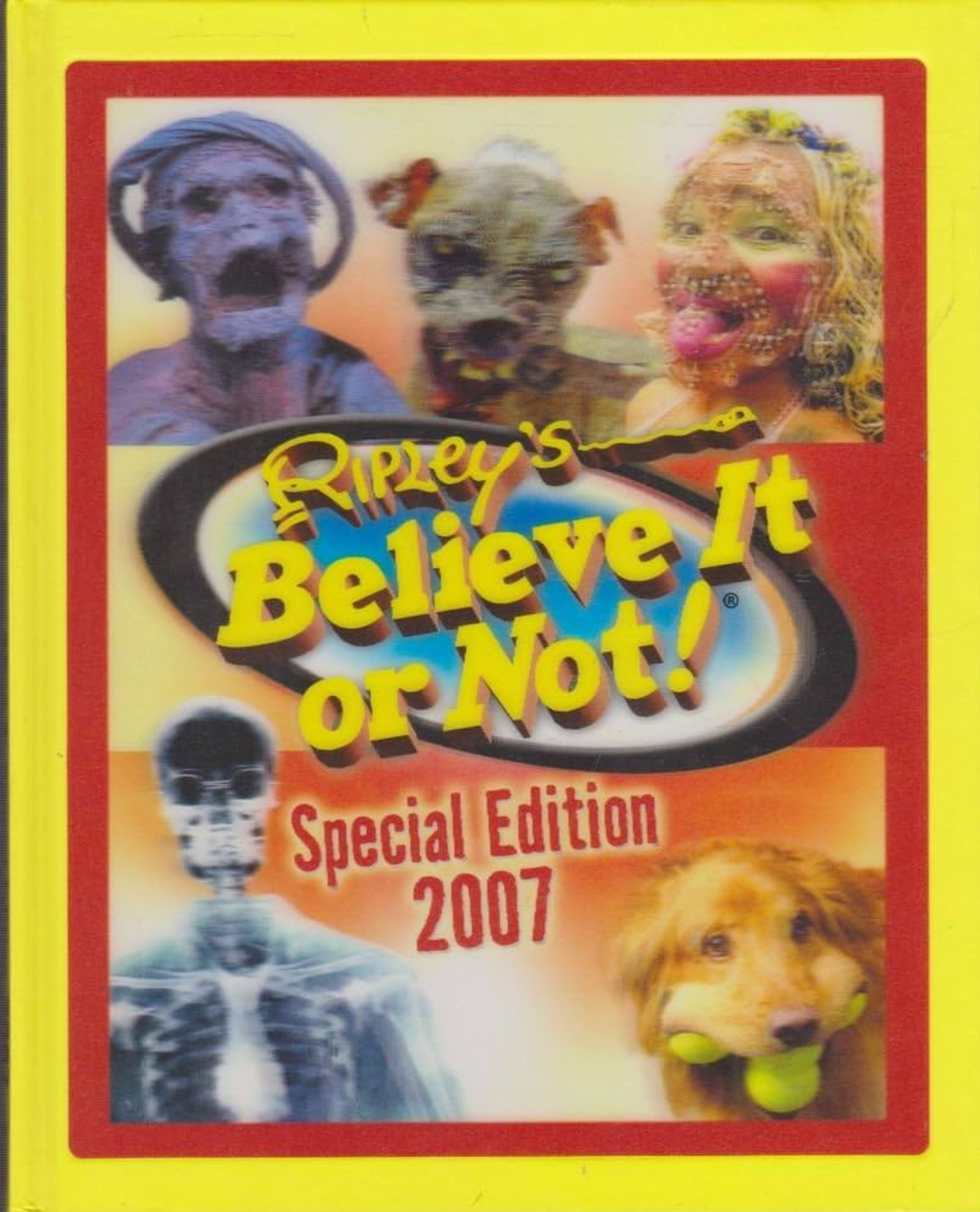
I’ve grown to become more curious about the limits of the world. In elementary school, I stayed through the Scholastic book fairs to read books like Diary of a Wimpy Kid, Big Nate, Ripley’s Believe It or Not, and especially the Guinness World Records. I saw wild factoids like world records for the most tennis balls crammed in a dog’s mouth (5 was the record set by Augie, a Golden Retriever, in 2007, but I checked again and it’s now 6, set by Finley, another Golden Retriever, in 2020).


Or seeing how while Mt. Everest was the tallest mountain on Earth at ~9km tall, it paled in comparison to the tallest mountain in the solar system, Olympus Mons, at ~26km, which really fascinated my tiny 5 ft self. What else was out there that could be so much astronomically larger than me and the mountains on Mars? Or maybe even so much smaller—smaller than the neurons with which I used to think these very thoughts? I yearned to better be able to contextualize and situate all of this trivia in my mind, perhaps in some kind of map or chart. I later stumbled upon Carey and Michael Huang’s Scale of Universe 2, which did a really good job of doing just that and also in capturing all of my waking attention for a few days. That project steered my interests into the sciences. In high school, I learned about Fermi calculations, which can be used to very quickly calculate absurd results like how high the world’s sea level would rise if the every person were to cannonball into the ocean.
Fermi estimate example
Seeing people shoot off these calculations mentally in a matter of seconds really awed me, and the prospect of gaining a better understanding of the world through more math like this intrigued me enough to influence me to choose a major in biophysics at UCLA, even though I had applied for bioengineering programs everywhere else for college.
While taking my physics classes, I did indeed learn a lot more math and new techniques to solve many new types of problems (e.g. probability/statistics, linear algebra, analysis, differential equations, perturbation theory, etc. for problems in stat mech, quantum mechanics, biophysics, EM, analytic mechanics, and etc.). However, I’d often find myself getting so lost in the sauce that I’d lose the physical intuition behind what I was solving and have a final result off by orders of magnitude. I’d often think about how helpful it would be if I had some kind of reference sheet so I could know what direction I was heading, roughly.
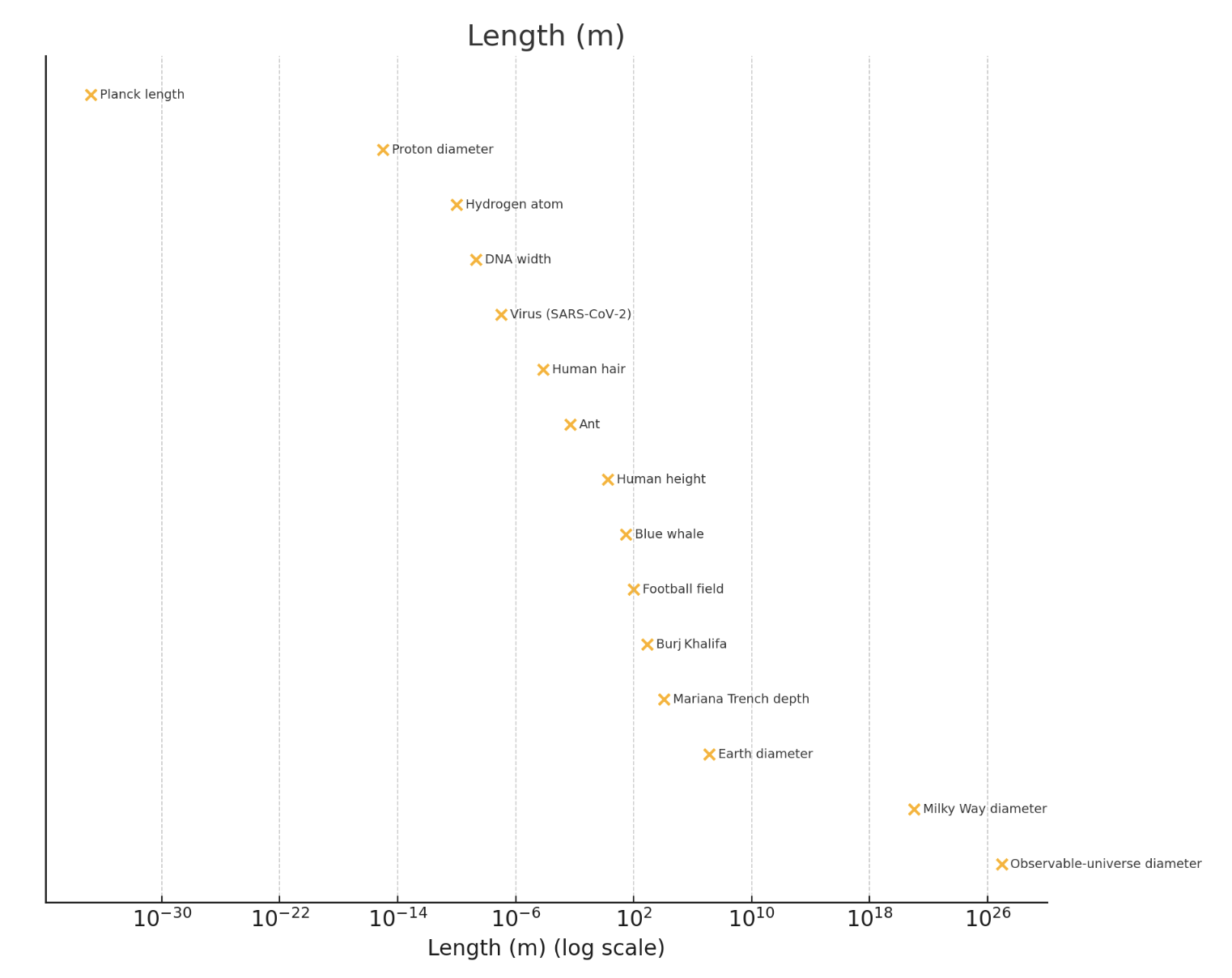
I developed my first prototype using Matplotlib and Python, starting with a few dimensions but considerably fewer items
I shelved the project for a while as it was good enough for my purposes at the time. But later with the advent of AI-coding tools, what used to take days of banging my head against pages of documentation and Stack Overflow now only takes hours of banging my head against a highly sophisticated magic language box. After billions of SV VC dollars, trillions of transistors, and decades of development from some of the brightest minds, I can finally send an API call to a distributed network of GPUs all so I can center a div 😆
This is my second website that I’ve made from scratch, after my MultiTanks game. I hope to continue expanding upon it with more feedback from users. Hopefully, this can serve as both an engaging learning tool like Scale of the Universe and also a useful reference for students and perhaps even researchers. I’m certainly open to feedback on accuracy and am open to perhaps making this more rigorous.
I hope you find the project enjoyable and useful :D
— Ethan